Description
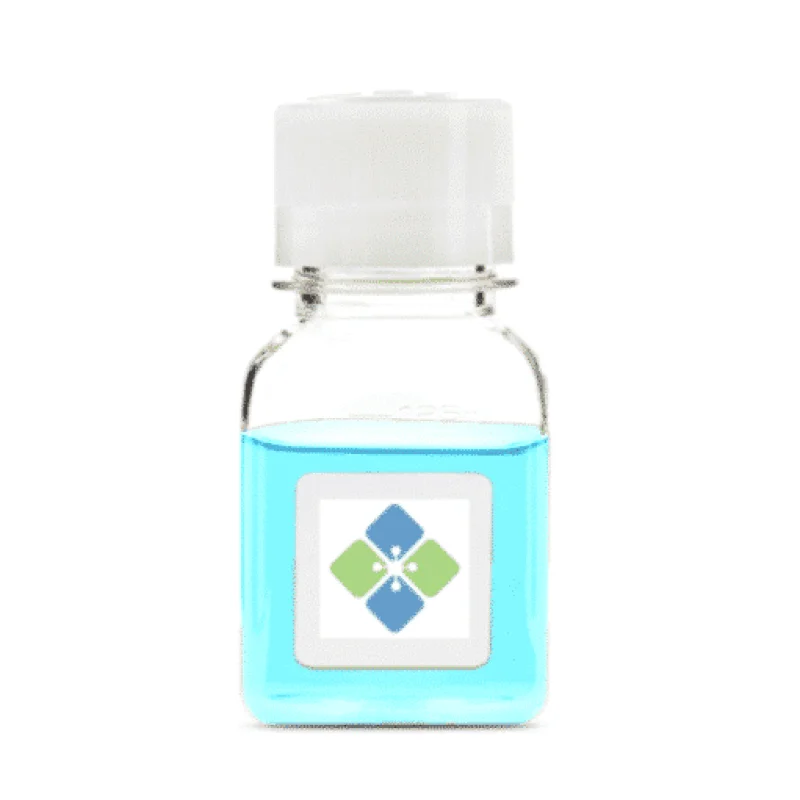
Deoxyribonucleic Acid from Herring Sperm
| Catalog number: | B2016378 |
| Lot number: | Batch Dependent |
| Expiration Date: | Batch dependent |
| Amount: | 1 mL |
| Molecular Weight or Concentration: | N/A |
| Supplied as: | Solution |
| Applications: | a molecular tool for various biochemical applications |
| Storage: | 20C |
| Keywords: | DNA |
| Grade: | Biotechnology grade. All products are highly pure. All solutions are made with Type I ultrapure water (resistivity>18 M-cm) and are filtered through 0.22 um. |
References
- Wang Y. [Interaction between quercetin and DNA] Sheng Wu Gong Cheng Xue Bao. 2020 Dec 25;36(12):2877-2891.
- Ullah S, Ali HG, Hashmi M, Haider MK, Ishaq T, Tamada Y, Park S, Kim IS. Electrospun composite nanofibers of deoxyribonucleic acid and polylactic acid for skincare applications J Biomed Mater Res A. 2023 Nov;111(11):1798-1807.
- Oda S, Igarashi Y, Manaka K, Koibuchi N, Sakai-Sawada M, Sakai K, Morisawa M, Ohtake H, Shimizu N. Sperm-activating proteins obtained from the herring eggs are homologous to trypsin inhibitors and synthesized in follicle cells Dev Biol. 1998 Dec 1;204(1):55-63.
- Shi JH, Pan DQ, Zhou KL, Lou YY. Exploring the binding interaction between herring sperm DNA and sunitinib: insights from spectroscopic and molecular docking approaches J Biomol Struct Dyn. 2019 Mar;37(4):837-845.
- Luo D, Woodrow-Mumford K, Belcheva N, Saltzman WM. Controlled DNA delivery systems Pharm Res. 1999 Aug;16(8):1300-8.
- TAKEMURA S. Hydrazinolysis of herring-sperm deoxyribonucleic acid Biochim Biophys Acta. 1958 Aug;29(2):447-8.
- Hayasaka T, Inoue Y. Chromomycin A3 studies in aqueous solutions. Spectrophotometric evidence for aggregation and interaction with herring sperm deoxyribonucleic acid Biochemistry. 1969 Jun;8(6):2342-7.
- Zhang Q, Duan S, Huang Y, Tian J, Hu J. Dual-band fluorescence detection of double-stranded DNA with QDs-Mn(2+)-pefloxacin Colloids Surf B Biointerfaces. 2022 Sep;217:112649.
- Glatt H, Engst W, Florian S, Schreiner M, Baasanjav-Gerber C. Feeding Brassica vegetables to rats leads to the formation of characteristic DNA adducts (from 1-methoxy-3-indolylmethyl glucosinolate) in many tissues Arch Toxicol. 2022 Mar;96(3):933-944.